
Ink that wrote our history
Any of us can go out today and purchase an ink cartridge – a pretty simple task, right?
Our presses use dry toner that arrives after an automated alert from the presses, which is about as effortless as it gets.
But it wasn’t always that easy.
Centuries ago, it had to be made by hand, to a very specific formula.
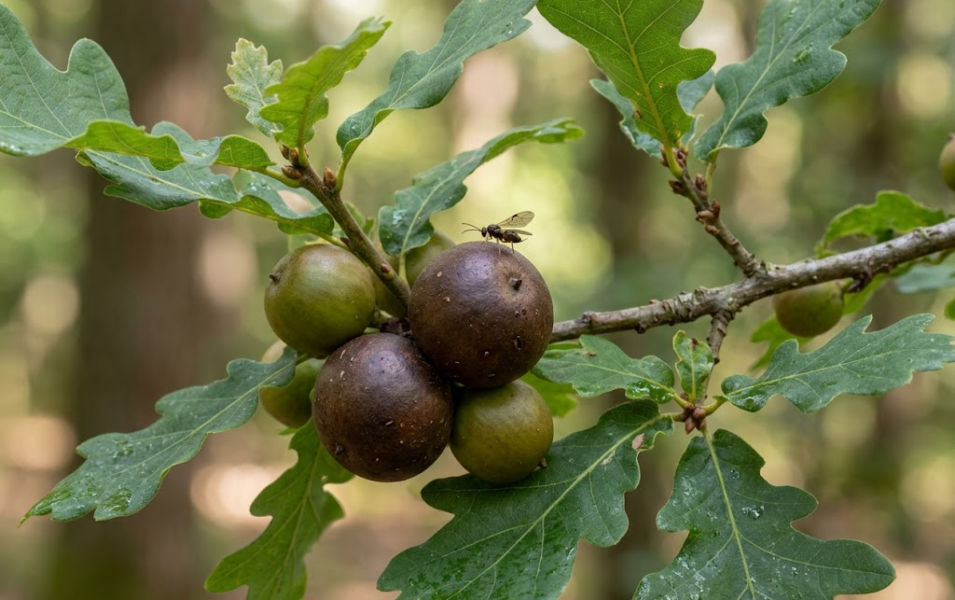
And it all started with the humble gall wasp, laying its eggs in young acorn buds.
In doing so, it effectively reprogrammes the oak, turning embryonic acorn buds into galls that become a home for its larvae.
There are many types of oak galls, but one in particular has helped shape our history.
For a thousand years, we’ve created a special type of ink with which almost all historical documents have been written.
And all because a tiny wasp laid an egg in an oak bud.
A little quirk of evolution that has shaped our history.
The dry oak galls are crushed, mixed with water, iron sulphate, and gum Arabic to form a durable, long-lasting ink.
The same ink that was used on our Magna Carta, the American Declaration of Independence, and the drawings of Rembrandt and Da Vinci.
The oak tree has helped us record our past, express our most profound ideas and share our deepest emotions.
Putting ink on paper is what we do.
If you’ve got a project, event, or campaign coming up and you’d like the print side to look sharp and run smoothly, we’re here for a quick chat.
Until next week.
Alec